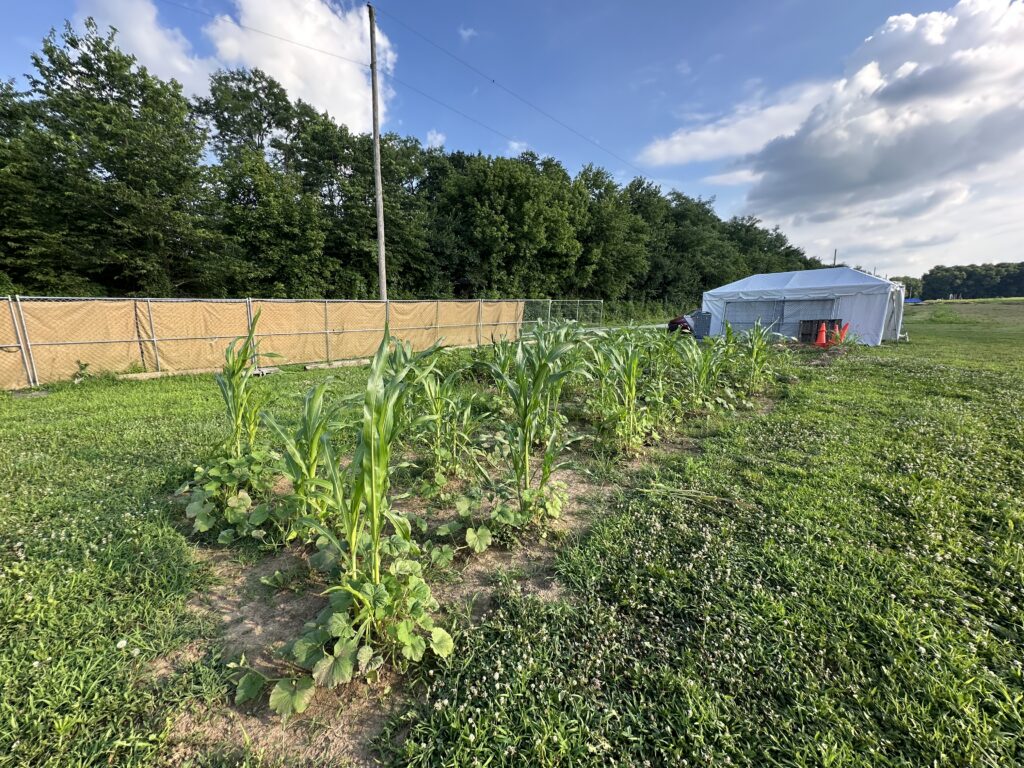
Have you ever cooked something you grew yourself? Many of us know the satisfaction and pride that comes with serving up food that we produce. Ancient people were no different, and ARI’s Land Stewardship team is introducing modern minds to Native American agriculture and the historic gardens of the Ohio River Valley.
ARI has a small Land Stewardship department (“Stew Crew”) dedicated to preserving the landscapes under ARI’s protection and using them to educate the public. Stew Crew’s staff and volunteers interpret the legacy of ancestral Native American people in the Midwest and South by managing gardens featuring plants identified through ancient soil samples from the sites we protect. Modern visitors to our sites in 2026 will see the exact same plants they would have seen growing along the Great Miami and Ohio Rivers in 1026.
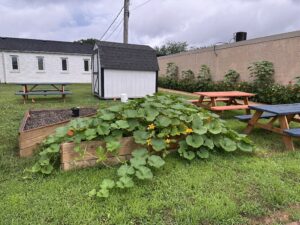
Our gardens and growing places are spread across four properties: the Guard Archaeological Preserve (GAP), ARI’s headquarters on West High Street, a greenhouse operation in Lawrenceburg, and the SEI Community Garden.
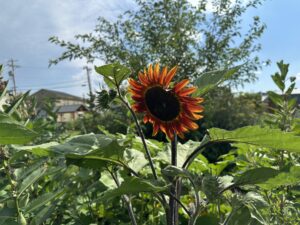
Some of the companion plantings grown at ARI’s gardens will be familiar to modern people, such as the Three Sisters; Stew Crew selects for and plants Native American heirloom varieties of corn, beans, and squash. Our reconstructed gardens at all three properties also feature lesser-known and far older Native American crops from Indiana: amaranth, sunflower, wild onion, wild bean, squash, and goosefoot (a quinoa relative), all proven to have been grown at a 2000-year-old site in ancient Dearborn County. These same plants are being grown for education and wider distribution at ARI’s small greenhouse operation along Walnut Street.
With the help of fellow staff and dedicated community volunteers and partners, the Stew Crew can focus our efforts on deepening our research into ancient agriculture, including the agronomy, landscaping, and cooking techniques used by the people who lived in the village. We are always looking to learn more about how these ancient farmers shaped and used the land.
ARI is proud to promote the living legacy of the Native American gardeners and farmers who made critical scientific advances in the distant past that helped shape the food we still eat today. Many of these advances took place right here along the Ohio River thousands of years ago. We look forward to sharing the fruits (and vegetables) of that research as we continue to deepen our stewardship of these lands and all they can share with us.
Ready to bring these ancient crops into your own kitchen? Explore this Maple & Scallion Bean Dip recipe, which highlights ingredients connected to the plants and foodways discussed above.
University and School Partnerships
Interested in sending your students to our field school? Contact us today to learn about one of our many opportunities for student learning.