What do archaeologists do with the information we learn from the sites we study? Excavation is only the first step. The real impact of archaeology comes from sharing discoveries so others—researchers, students, and the public—can learn from archaeological research.
Archaeologists share their findings in many ways: formal reports, journal articles, public talks, and community programs. One of the most important venues, however, is the academic or professional conference.
Conferences are where archaeological research becomes truly collaborative. Researchers from different regions and specialties gather to present discoveries, discuss new methods, and challenge existing interpretations. These conversations spark new research projects, connect institutions studying similar questions, and introduce techniques that reshape how we study archaeological materials. In short, conferences help move the field forward.
They are also one of my favorite parts of the job. Conferences allow us to connect with colleagues, learn about exciting work happening across the region, and share the research underway at the Archaeological Research Institute (ARI). The relationships built at these events often lead to collaborations that expand what we can accomplish.
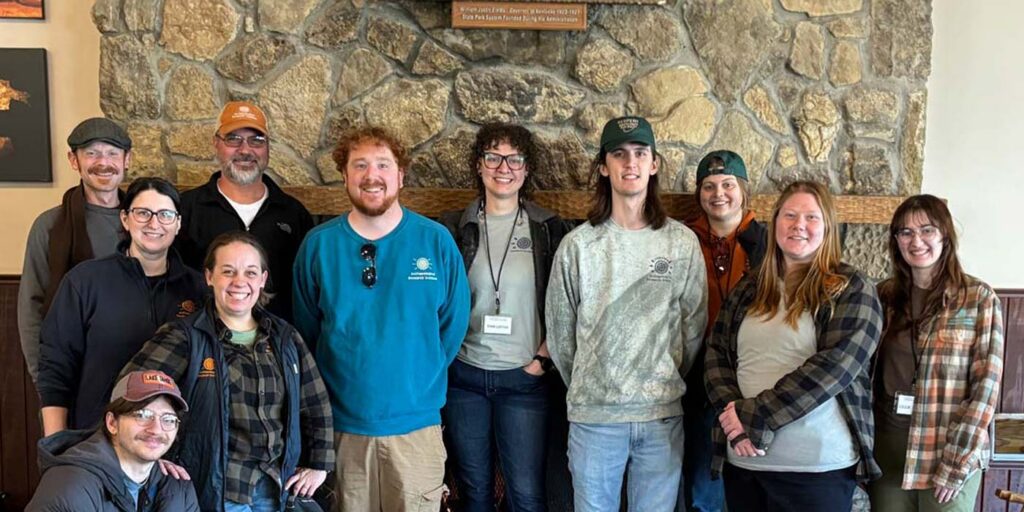
From February 27–March 1, 2026, our team attended the Kentucky Heritage Council’s Annual Archaeological Conference for the fourth year in a row. The conference highlights archaeological research across Kentucky and the surrounding region. While ARI has not (yet) conducted fieldwork in Kentucky, we are welcomed as contributors to the broader story of Ohio Valley archaeology. Participating in conferences like this allows us to share our work with a wider research community and learn from others studying similar questions.
If you visited ARI in January or February, you may have seen our team preparing their presentations. This year, seven members of our staff and research team presented four different archaeological research projects underway at ARI.
Forrest Schmitt, Gus Lehmann, and Samm Linton presented research on ancient salt production technologies. In the past, salt was not the easily accessible household staple it is today. Communities often produced salt by boiling briny water in large ceramic vessels known as salt pans.
Their research explores how these vessels were constructed and sealed to prevent leaks. By recreating salt pans and testing sealants such as resin, animal fat, and starch, the team is helping archaeologists better understand how ancient salt production worked in practice.
Betsy Dulle and Lee Strange presented a poster examining how archaeologists identify evidence of climate change in the archaeological record. Their work reviews scientific approaches used to detect past environmental shifts and explores how those methods could apply to research at the Guard Site.
This project is part of a broader collaboration studying long-term environmental change in the Ohio River Valley.
Lillie Daniel presented a poster examining the marketing personas ARI uses to guide communication with different audiences. Understanding the motivations of various visitor groups helps ARI design outreach, programs, and digital content that better connect people with archaeology. Her presentation sparked conversations about new approaches to public engagement.
If you have visited the lab recently, you know the Boarding House site has produced many iron artifacts—often heavily corroded. Tessa Wilk presented research comparing conservation techniques used to remove rust, including electrolysis and ultrasonic cleaning.
These methods stabilize artifacts and reveal details that allow archaeologists to study them more effectively while ensuring they are preserved for the future.
I am incredibly proud of the ARI team and the research they shared at this year’s conference. Presenting at professional gatherings highlights the important work happening at ARI while contributing to the broader archaeological conversation.
Perhaps most importantly, conferences remind us that archaeology is never done in isolation. It is built on shared knowledge, curiosity, and the exchange of ideas. Every presentation, question, and conversation helps advance archaeological research and brings us one step closer to understanding the stories buried beneath our feet.
University and School Partnerships
Interested in sending your students to our field school? Contact us today to learn about one of our many opportunities for student learning.